
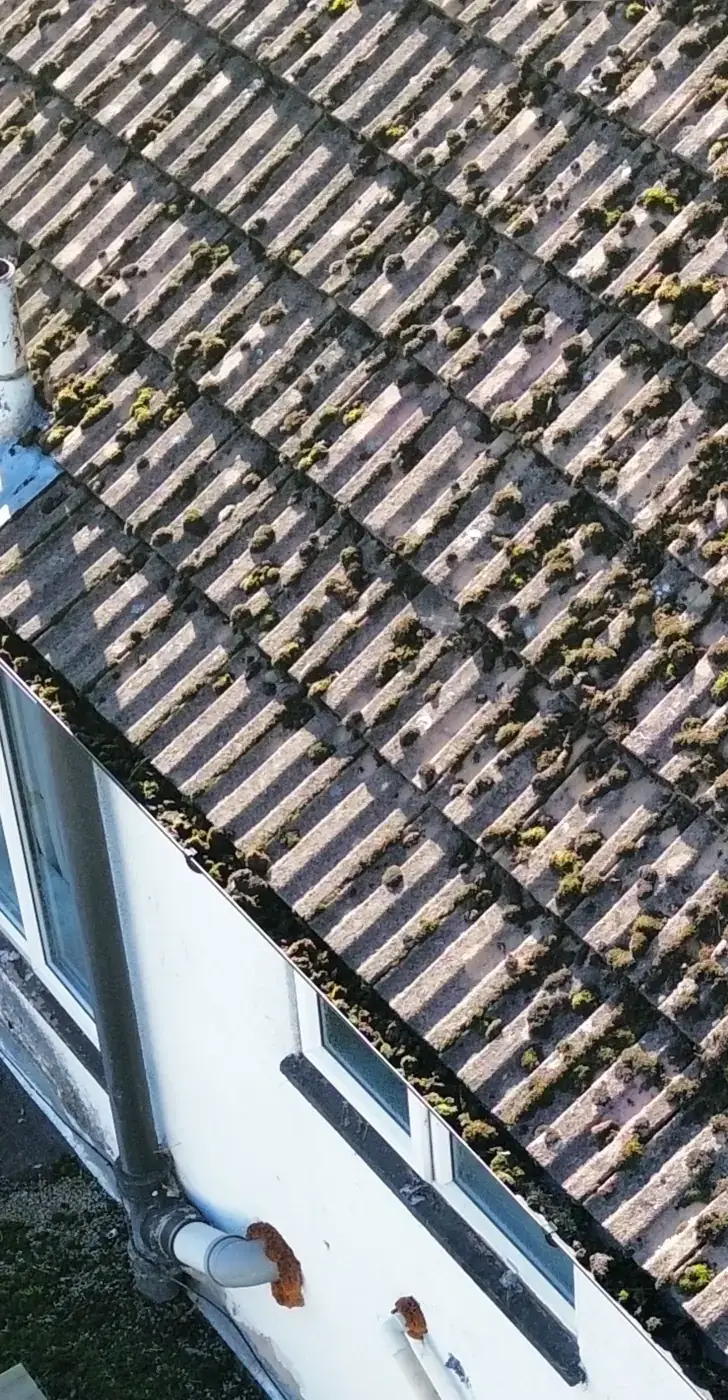
The best time to check your roof and gutters is late autumn, once the leaves are down and before the worst of the winter storms. Most of the checks take ten minutes from the ground: look for slipped or missing tiles, blocked or sagging gutters, loose lead and damp patches in the loft. Small faults found now are usually quick fixes. Left until a storm, they turn into leaks.
In short
- Walk round the house in daylight and look up. Binoculars help.
- Clear gutters and downpipes once the leaves have fallen.
- Look in the loft for daylight, damp or drips after rain.
- Get slipped tiles, loose ridge tiles and cracked flashing sorted before a storm, not after.
- Stay off the roof and off ladders in wind, rain and frost.
Why check your roof before winter?
Winter is when roofs get tested. Heavy rain finds any gap, strong wind lifts loose tiles, and water that gets into cracks can freeze and open them wider. A tile that has slipped half an inch in summer can be the one that blows off in a storm.
Gutters matter just as much. Once they are full of leaves they can't carry the water away, and it runs down the walls instead. Our guide to gutters overflowing in heavy rain covers that in more detail.
Your winter checklist, step by step
Do this on a dry, calm day. You don't need a ladder for any of it.
1. Look at the roof from the ground
Stand back on the pavement or at the end of the garden and look along each slope.
- Are any tiles or slates missing, cracked or out of line?
- Are the ridge tiles along the top all in place and straight?
- Is there a dip or sag anywhere in the roof line?
- Is there heavy moss? A little is fine. Thick clumps hold water and can lift tiles.
2. Check the chimney
- Is the pointing (the mortar between the bricks) crumbling?
- Is the chimney leaning, even slightly?
- Look at the lead flashing where the chimney meets the roof. Is it lifting, cracked or missing in places?
Chimneys cause a lot of winter leaks because they take the full force of the weather. See our chimney repairs and leadwork page.
3. Check the gutters and downpipes
- Are plants or grass growing out of them? That means they're blocked.
- Does any section sag or pull away from the wall?
- After rain, is water dripping from the joints or spilling over the front?
- Is water coming out of the bottom of each downpipe?
If you can't see into the gutters, watch them in the next downpour. Water spilling over in one spot usually means a blocked outlet. A gutter cleaning visit sorts most of these.
4. Check the fascias and soffits
The fascia is the board along the roof edge that the gutter fixes to. The soffit is the board underneath it.
- Is paint peeling, or is wood soft or crumbling?
- Are there gaps where birds or water could get in?
- Is the gutter pulling the fascia away from the wall?
Rotten fascias need dealing with before new gutters go up. See fascias and soffits.
5. Look at flat roofs
Garage roofs, extensions and dormers are often flat.
- Is water still sitting on it two days after rain?
- Are there bubbles, splits or cracks in the surface?
- Is the edge trim loose?
Ponding water and splits are where flat roof leaks start. See our flat roofing page.
6. Check the loft
Go up with a torch on a dry day, then again after heavy rain.
- Can you see daylight through the roof?
- Are there damp patches, stains or drips on the timbers or the underside of the roof?
- Is the insulation damp in any spot?
- Is there a musty smell?
Damp in one patch usually lines up with a slipped tile, cracked flashing or a gap around the chimney.
7. Look inside the house
- Any new stains on upstairs ceilings, especially near the chimney breast or in corners?
- Any damp patches high on outside walls, or above windows?
These are often the first sign of a roof or gutter problem.
What can I do myself, and what needs a roofer?
Safe to do yourself: looking from the ground, checking the loft, clearing a bungalow gutter with a sturdy ladder and someone footing it, and keeping drains at the bottom of downpipes clear.
Leave to a roofer: anything on the roof itself, anything above single-storey height, replacing tiles or slates, leadwork, chimney work and flat roof repairs. Roofs are slippery in winter, and most roofing injuries are falls.
Never go on a roof or up a ladder in wind, rain or frost.
What to do if a storm damages your roof
- 1Stay safe. Keep away from the house edge if tiles are coming down.
- 2Put a bucket under any drip and move things away from it.
- 3Take photos of the damage from the ground and inside, for your insurer.
- 4Call a roofer. A temporary repair stops water getting in until the full fix can be done.
The Met Office issues weather warnings a few days ahead. If a storm is forecast, that's the time to get a loose tile looked at.
What we see on Oxfordshire roofs
Oxfordshire has a big mix of houses, and each kind has its own weak spots in winter.
- Older terraces and semis: slate or clay tile roofs, chimneys on most houses, and often old lead flashing. Chimney leaks and slipped slates are common.
- Newer estates: concrete tile roofs that are generally sound, but gutters and outlets block with silt and moss washed off the tiles.
- Extensions and garages: a lot of flat roofs, where ponding water and splits show up first in a wet winter.
- Homes near mature trees: gutters full of leaves by November, sometimes more than once a season.
Frequently asked questions
When is the best time to check my roof before winter?
Late October to November suits most homes. The leaves have mostly fallen, so gutters can be cleared once and stay clear, and there's still time to fix anything before the January and February storms. A quick look again after any big storm is also worth doing.
How do I know if my roof needs repairing?
Signs include missing or slipped tiles, a sagging roof line, cracked or lifting lead around the chimney, and damp or daylight in the loft. Stains on upstairs ceilings are another clue. If you spot any of these, it's worth getting a roofer to look before the weather turns.
Can I check my roof without going on it?
Yes, and you should. Walk round the outside and look up, ideally with binoculars, then check the loft with a torch. That shows most problems. Leave climbing on the roof to a roofer with the right access equipment, especially in winter.
How often should gutters be cleared?
Once a year suits most houses, ideally after the leaves drop in late autumn. Homes close to big trees may need it twice a year. Plants growing out of the gutter, or water spilling over in rain, mean it's overdue.
What should I do if my roof starts leaking in a storm?
Catch the water in a bucket, move belongings away, and take photos for your insurer. Don't go up a ladder or onto the roof in the storm. Call a roofer: a temporary repair can stop more water getting in until a full repair is possible.
Need your roof or gutters checked?
Get a free quote: call 01865 587212 or send us a message. Small jobs are welcome and we can usually visit the same day. For emergencies, we take callouts 24/7.