
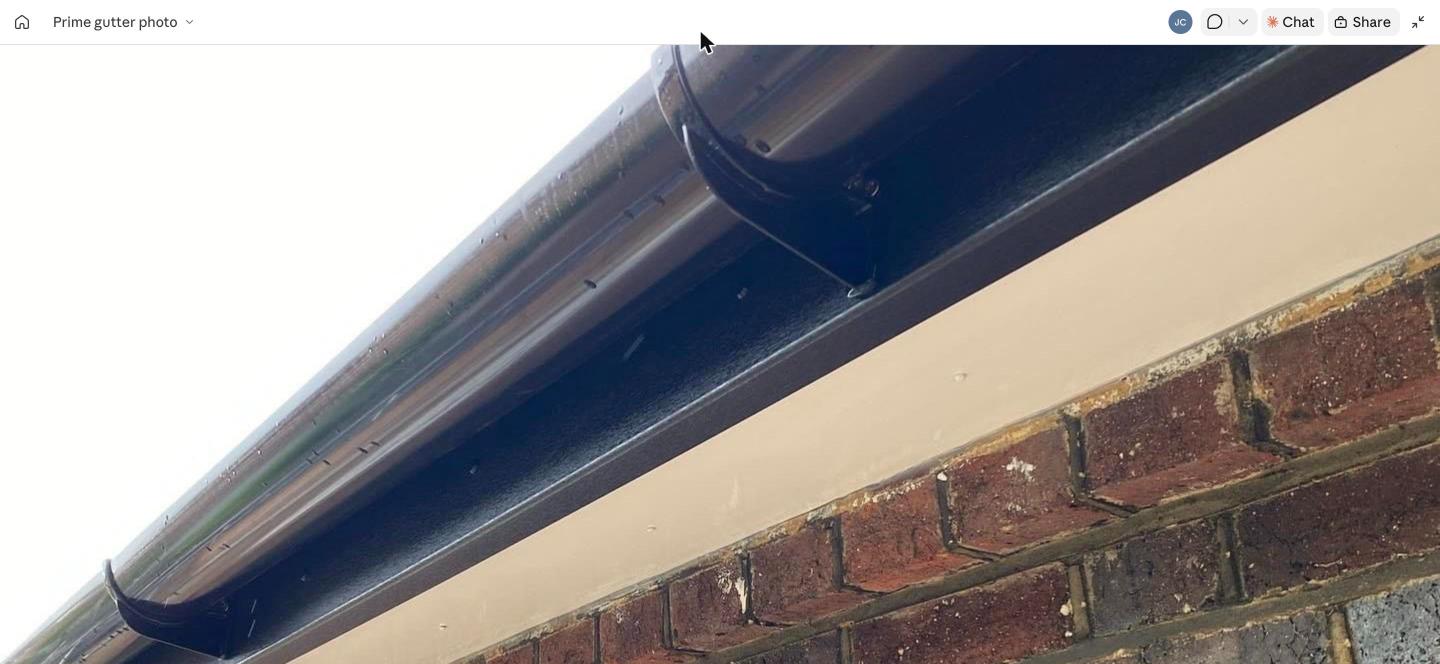
Most gutters that overflow in heavy rain are blocked, usually at the outlet where the gutter drops into the downpipe. The next most common causes are a gutter that has sagged and lost its fall (the slight slope towards the downpipe), a blocked downpipe, or a gutter that is simply too small for the size of roof it drains.
A bit of spill in a once-a-year cloudburst can be normal. Water pouring over the same spot every time it rains is not, and left alone it soaks the wall below.
In short
- Blocked outlets and downpipes cause most overflows, especially in autumn.
- If water spills in one place, look at the nearest outlet or a dip in the gutter.
- If it spills along the whole length, the gutter may be too small or set too flat.
- Overflow left for months can lead to damp patches, stained brickwork and rotten fascia boards.
- Never climb a ladder in the rain. Most checks can be done from the ground.
What causes gutters to overflow?
Leaves, moss and silt. Leaves drop in October and November, and moss washes off the roof all year. It all collects at the outlet and forms a plug. Once the outlet is blocked, the gutter fills and spills over.
A blocked downpipe. If the gutter is clear but still fills up, the blockage may be lower down, often at a bend in the downpipe or where it meets the drain.
The gutter has lost its fall. Gutters need a gentle slope towards the downpipe. Brackets work loose or snap over time, so a section sags. Water sits in the dip and spills over in heavy rain.
Leaking joints. The rubber seals between uPVC gutter sections perish with age. That shows as drips at the joints rather than water over the top, but it often turns up at the same time.
The gutter is too small for the roof. A big or steep roof, or a valley where two roof slopes meet, can send more water to one spot than a standard gutter can take. In a downpour the water shoots straight over the front.
How can I tell what's wrong from the ground?
Go out during or just after heavy rain and watch. You can learn a lot without a ladder.
- 1Where is it spilling? Over one spot near a downpipe usually means a blocked outlet. Over a spot in the middle of a run usually means a sag.
- 2Is the downpipe running? If the gutter is overflowing but little water comes out of the bottom of the downpipe, the downpipe is blocked.
- 3Is it dripping at the joints? That points to failed seals.
- 4Is it spilling along the whole length? That points to a gutter that is too small or set too flat.
- 5Look for plants. Grass or weeds growing out of a gutter means it hasn't been cleared in a long time.
Is an overflowing gutter a problem?
Yes, if it happens every time it rains. Water running down the same bit of wall can cause:
- damp patches inside, often in an upstairs corner or above a window;
- green staining and moss on the brickwork;
- rotten fascia boards (the boards along the roof edge the gutter is fixed to);
- water pooling against the house at ground level.
An overflow is usually cheap to sort out early. The damage it causes takes longer, and costs more, to put right.
Can I clear my gutters myself?
On a bungalow or a low single-storey extension, many people do, with a sturdy ladder, a helper footing it, gloves and a small scoop. Clear towards the outlet, bag the debris, then run a hose into the gutter to check it drains.
On a two or three-storey house, it's a job for someone with the right access equipment. Don't lean a ladder against the gutter itself, and never work at height in wind or rain.
When does it need a gutter repair or replacement?
Clearing fixes a blockage. It won't fix:
- snapped or loose brackets, where a section has dropped;
- joints that leak even when the gutter is clear;
- cracked or split sections;
- old cast iron gutters that have rusted through;
- a gutter that is too small for the roof.
These need the gutter re-aligned, sections replaced, or in some cases a new uPVC gutter system fitted. If the fascia boards behind the gutter has gone soft, that needs dealing with at the same time, or the new gutter has nothing solid to fix to.
What we see on Oxfordshire homes
Autumn is when the calls come in. Oxfordshire has a lot of mature trees around older houses, and by November gutters near them are often full.
On older terraces and semis, the original gutters may be cast iron or old uPVC with perished seals. On newer estates, gutters are usually fine but outlets block with silt washed off concrete roof tiles.
Frequently asked questions
How often should gutters be cleaned?
Once a year suits most houses, ideally in late autumn after the leaves have dropped. Homes close to big trees may need clearing twice a year, in spring and late autumn. If you see plants growing out of the gutter, it's overdue.
Why is my gutter overflowing when it isn't blocked?
Check the downpipe first, because a blockage lower down makes the gutter back up. If that's clear, the gutter may have sagged and lost its fall, or it may be too small for the area of roof it drains. A roofer can check the fall and capacity in one visit.
Can an overflowing gutter cause damp inside?
Yes. Water running down the same section of wall soaks into the brickwork over time. It often shows as a damp patch high up inside, near a corner or above a window. Fixing the gutter is the first step before treating the wall.
Is it worth replacing old cast iron gutters with uPVC?
It depends on the house and the condition of the iron. uPVC is lighter and needs less upkeep, but on some period properties keeping the cast iron look matters. If the iron has rusted through in places, replacing is often better value than patching.
Are gutter guards a good idea?
They can cut down how often you need clearing, especially under trees. They don't stop fine silt and moss, so the gutter still needs checking now and then. They suit some houses better than others.
Need your gutters looked at?
Get a free quote: call 01865 587212 or send us a message. Small jobs are welcome and we can usually visit the same day. For emergencies, we take callouts 24/7.